6. Protecting People and the Environment
Several issues must be considered before renovating or demolishing a building containing PCBs. It will be necessary to ensure that:
- workers are protected against unnecessary exposure
- occupants are protected against unnecessary exposure
- no PCBs are dispersed to the surrounding environment
- contaminated waste is managed safely.
This section deals with health and safety in the context of renovation or demolition of buildings containing PCBs. It also describes how occupants can be protected and how the dispersal of PCBs to the external environment can be curtailed during renovation or demolition.
6.1 The Working Environment
When renovating or demolishing buildings containing PCBs, contractors must observe several precautionary measures because the management of PCB-contaminated materials and waste is subject to working environment regulations. This section is a general description of the responsibilities of actors and the personal protective equipment (PPE) used by contractors during work. Section 6.2, Protecting Occupants outlines working environment issues affecting occupants of buildings with PCB-contaminated indoor air.
Regarding renovation or demolition, the BrancheArbejdsmiljøRådet for Bygge og Anlæg recommends that contractors complete a relevant course in the management of PCBs (BrancheArbejdsmiljøRådet for Bygge og Anlæg, 2010).
6.1.1 Operators’ Duties
The duties of the building owner, employer, project supervisor, and consultants are described in various executive orders (Danish WEA, 2010b; 2013a; 2013b). Additionally, they are described by the Danish WEA in Annex A in the At-intern instruks IN-9-3, PCB i bygninger (Internal WEA Brief IN-9-3, Building-Related PCB) (Danish WEA, 2014). Furthermore, information about PCB on the construction site is available from the Danish WEA website (www.arbejdstilsynet.dk, 2016).
The following resources are available to clarify the duties of different actors:
- Branchevejledning om håndtering og fjernelse af PCB-holdige bygningsmaterialer (Trade Guidelines on Management and Removal of PCB-Contaminated Building Materials) (BrancheArbejdsmiljøRådet for Bygge og Anlæg, 2010)
- PCB-guiden (www.pcb-guiden.dk, 2016)
- Vejledning og beskrivelse for udførelse af PCB-renovering (Guidelines and Specifications for Carrying out PCB Renovation) (Dansk Asbestforening, 2010).
The Building Owner
The building owner must assist the employer in ensuring that building and construction work can be carried out safely in terms of occupational health and safety (see the Danish Working Environment Act, § 37 (6) (Ministry of Employment, 2010)).
If two or more contractors are expected to work at the site simultaneously, the building owner must (pursuant to § 4 (1) of the Executive order on duties of the client) ensure that one or more coordinators are appointed (Danish WEA, 2013a). The building owner must ensure that a health and safety plan is prepared by the coordinator(s) appointed to manage health and safety during the planning phase of the building or construction project. This plan should contain specific measures concerning particularly hazardous work (see Executive Order on duties of the client § 10, part 1 (2) (Danish WEA, 2013a)).
When at least two employers are present at the construction site at the same time, the building owner has to decide on the work with PCB in the health and safety plan (Danish WEA, 2014).
When coordinating and preparing the health and safety plan, the building owner must ensure that any special risks at the construction site are identified, investigated, and assessed. To the extent necessary, the building owner must also counter special risks and clearly indicate them prior to commencing the work (see Executive Order on duties of the client, § 11, part 1 (1) (Danish WEA, 2013a)). In this context, the special risks could be PCB-contaminated materials that have to be managed during the construction process.
The building owner must, for example, ensure that the appointed coordinator(s) prepare a journal adapted to the special features of the building or plant. This journal must contain a list of special health and safety issues which should be considered in the event of any future work processes (see Executive Order on duties of the client, § 10, part 1 (3) (Danish WEA, 2013a)).
The plan could be an integral part of the documentation prepared by project supervisors in cases when (under the provisions of current working environment legislation) project supervisors are required to prepare a list of special issues to be considered in the event of future repair or maintenance work.
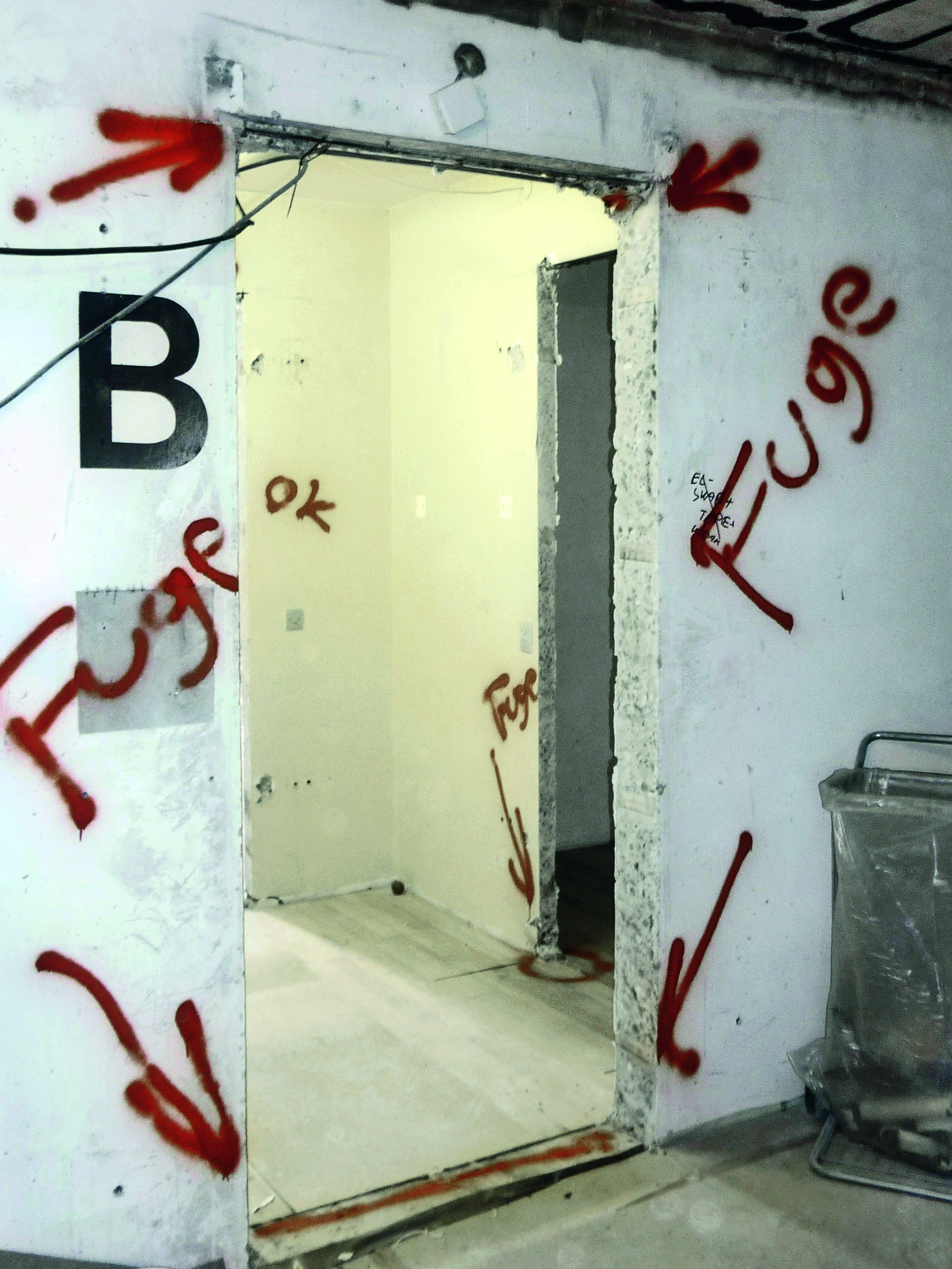
Figure 26. Example in which locations with caulk containing PCBs are marked.
The Employer
When building or construction necessitates addressing PCB-contaminated building components, the work will always be subject to a separate written assessment of the planned tasks, to ensure full compliance with health and safety requirements (see § 7, part 2, cf. Annex 1 (2) in Executive order on building and construction (Danish WEA, 2010b)).
In the At-instruks IN-9-3 (Internal WEA brief IN-9-3, PCB i bygninger (Building-Related PCB) (Danish WEA, 2014), the Danish WEA lists the following issues which contractors must address:
- They must specify methods to limit dust as much as possible
- They must specify methods to ensure that PCB-contaminated building components or materials are not exposed to undue heating
- They must specify how they will set up effective dust extraction from machines when lock saws, bayonet saws, or power knives are needed, for example
- They must specify how they will avoid spreading PCB-contaminated dust or vapours to others working on the site or to the surrounding environment
- They must specify how they will transport and store construction and demolition waste (CDW) containing PCB
- They must specify which kind of PPE to will be used
- They must specify which kind of PPE welfare amenities to set up
- They must specify which kind of PPE measures to take regarding personal hygiene
- They must specify how to instruct employees in correct working methods, the correct use of PPE, and hygiene procedures, for example.
These issues are discussed in detail in Sections 6.1.3, Dust and 6.1.4, Personal Protective Equipment. The transport and storage of PCB-contaminated CDW is discussed in Section 7, Waste Management.
Project Supervisors and Consultants
Prior to renovating or demolishing buildings containing PCBs, the participant advising the building owner must inform the building owner about the specific preliminary investigations to be conducted. In turn, the building owner must ensure that such investigations are implemented (Danish WEA, 2014).
In the project material, the project supervisor must specify the special risks and other pertinent issues influencing health and safety during both implementation and maintenance of the specific project (see § 10 (1) in Executive order on duties of the project supervisors and consultants (Danish WEA, 2013b)). This means that project supervisors have a duty to detail construction and design issues that are significant to the future use and maintenance of the PCB-renovated building.
It is stipulated in § 12 (1), that the project supervisor must describe the special features of the building to ensure that any future maintenance and repair of the building can be carried out safely. The description must contain a list of the special issues affecting health and safety in future work carried out on the building (see Section 2.8, Control and Documentation).
6.1.2 Exposure
PCBs are not only assimilated by ingesting contaminated foods and inhaling air containing PCB. Assimilation may occur via dermal contact with building components containing PCBs and by ingesting dust (see SBi Guidelines 241, Survey and Assessment of Building-Related PCBs, 1.3 Toxic properties (Andersen, 2015)).
Persons working with building renovation may be extraordinary exposed. Studies from the USA and Sweden evidence elevated PCB concentrations in the blood of building workers compared to other trade groups (Herrick et al., 2007; Wingfors et al., 2006). Many renovation projects have been implemented without any previous knowledge of PCB contamination in the buildings, meaning that workers were not protected.
Even in buildings with low PCB concentrations in indoor air, exposure is significantly increased when PCB-contaminated materials are tooled.
If PCB-contaminated materials are removed or modified, elevated PCB concentrations in indoor air may occur due to exposed surface areas and dust generation (see Section 5.1, Physical Removal). PCB-contaminated dust can be a source of exposure which one must be protected from.
The Danish WEA determines rules for the protection of people who are exposed to PCBs during renovation and demolition work. In such situations, PPE must be worn (Danish WEA, 2014, internal WEA brief IN-9-3). The exposure is very complex since it does not only occur via inhalation. The limit for indoor-air PCB concentrations is inadequate for the renovation or demolition of buildings containing PCBs where employees must be protected against exposure from the overall work process.
6.1.3 Dust
If dust or other kinds of air pollution occurs during the work process, as far as possible, it must be abated at the source or be removed (see § 31 (3) of Executive order on building and construction (Danish WEA, 2010b)). According to Annex A in the At-intern instruks IN-9-3, PCB i bygninger (Internal WEA brief IN-9-3, Building-Related PCBs) (Danish WEA, 2014), work with PCB-contaminated building components, materials, and waste must be planned and executed without the use of power or high-speed tools to the full extent possible. This ensures that dust and heat generation are avoided as far as possible. If impossible, according to the Danish WEA, it may be necessary to set up:
- Process ventilation (e.g., dust extraction using machines and mechanical room ventilation)
- Extraction, ventilation, and clean-up with suitable vacuum cleaners using HEPA filters (or similar filters) and vacuuming air purifiers. The exhaust should be led out into the open.
- Shielding, enclosures (e.g., using plastic), and possibly establishing negative pressure in the working area.
The BrancheArbejdsmiljøRådet for Bygge og Anlæg has published guidelines on dust on construction sites, outlining broad efforts to curb dust (BrancheArbejdsmiljøRådet for Bygge og Anlæg, 2012). They have also published guidelines on the management and removal of PCB-contaminated building materials (BrancheArbejdsmiljøRådet for Bygge og Anlæg, 2010).
6.1.4 Personal Protective Equipment (PPE)
If it is impossible to plan, organise, and carry out work with guaranteed safety and without potential adverse health effects, the work should only be carried out with PPE (see § 3 of Bekendtgørelse om brug af personlige værnemidler (Executive order on the use of PPE) (Danish WEA, 2010a)).
The use of certain vibrating tools may be subject to time restrictions.
When workers collect samples or renovate buildings with PCBs, it will often be impossible to protect them against PCB exposure if they are not wearing PPE. Workers must therefore always wear suitable PPE when working in conditions with a risk of PCB exposure.
It is the responsibility of the contractor to supply PPE to employees (see § 6 of Bekendtgørelse om brug af personlige værnemidler (Executive Order on the Use of PPE) (Danish WEA, 2010a)). The contractor must ensure that PPE is worn from the time the work is commenced and for the full duration of the project (see § 4 of Bekendtgørelse om brug af personlige værnemidler (Executive Order on the Use of PPE) (Danish WEA, 2010a)).
Furthermore, the employer must ensure that only workers who have received suitable instruction have access to high-risk areas (see § 11 (2) of Bekendtgørelse om arbejdets udførelse (Executive Order on the Performance of Work) (Danish WEA, 2004)).
PPE can be removed in suitable facilities on or near construction sites. Workers should wash their hands and faces before eating and should take baths at the end of the working day (Danish WEA, 2014; Danish WEA, 2010b).
Personal Hygiene
Personal hygiene is an important part of the protective measures against exposure. The hygiene requirements for a simple window replacement and interior renovation where dust-generating tools are used differ considerably. This is described in more detail in Branchevejledning om håndtering og fjernelse af PCB-holdige bygningsmaterialer (Trade Guidelines on Management and Removal of PCB-Contaminated Building Materials) (BrancheArbejdsmiljøRådet for Bygge og Anlæg, 2010).
Signage
Based on the actual work situation, the employer must specify which personal protective equipment to use in specific areas, using signs or pictograms. The signs must be made of sturdy material and be adequately maintained (Danish WEA, 2010a).

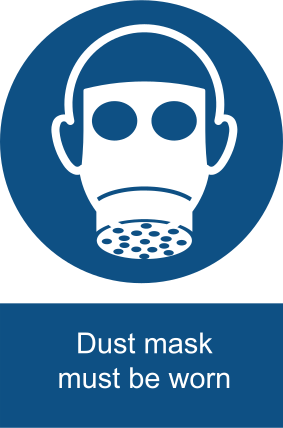

Figure 27. Signage for mandatory PPE to be worn at the entrance to a work zone containing PCBs.
6.1.5 Need for Protection
The need for PPE depends on the kind of work being performed and hence what level of PCB concentrations workers risk being exposed to. The specific types of PPE required must be stated in the risk assessment of the work to be performed prior to its implementation. The need for protection depends on whether it is necessary to collect samples from caulk or remove window sealant containing PCBs, for example. The selection of tools should factor into the selection of PPE because the use of power-driven cutting tools places higher demands on protective equipment compared to tools that are not power-driven (see Section 6.1.3, Dust).
While collecting samples from materials suspected of containing PCBs, at a minimum PCB-resistant gloves must be worn. If the sample collection involves excessive dust, protective clothing and respiratory protection should be worn to the extent necessary and the immediate environment should be screened off using plastic or similar materials. This applies when collecting concrete samples indoors, for example.
Table 13 details special safety concerns and the need for PPE when handling building materials containing PCBs.
Removing adjoining materials containing PCBs will often generate dust. PPE should therefore be worn, and dust extraction devices should be fitted to power tools to avoid dispersal. Using wet cutters will minimise the formation of inhalable dust containing respirable quartz, which is considered carcinogenic. However, wet cutters are not recommended for materials containing PCBs, as the PCB-contaminated water can be difficult to collect (Danish Working Environment Authority, 2014).
Table 13. The need for PPE and special issues when handling PCB-contaminated building materials (Danish Working Environment Authority, 2014; BrancheArbejdsmiljøRådet for Bygge og Anlæg, 2010; www.pcb-guiden, 2016).
Action | Personal protective equipment | Special issues |
|---|---|---|
Replacing insulating glazing units with PCB-contaminated plastic sealant | PCB-resistant gloves, disposable protective clothing, class P3 respiratory protection. | The risk of broken panes implies that cut-resistant gloves and safety glasses should be worn. If using power tools, class A2P3 respiratory protection is required plus local dust extraction devices for mechanical tools during the work process. |
Removing interior caulk generally, including window sealant | PCB-resistant gloves, type 4/5 protective clothing, class P3 respiratory protection. | The floor is covered by plastic or similar. Fellow workers must not be exposed to PCBs, and it may be necessary, therefore, to seal off the work area. If using power tools, class A2P3 respiratory protection must be worn, and local extraction fitted to mechanical tools during the work process. In this case, the work area is sealed off by interim dust-screening walls and negative pressure is established in the work area (e.g., using an air purifier with a vacuum effect). |
Removing exterior caulk generally, including window sealant | PCB-resistant gloves, type 4/5 protective clothing, class P3 respiratory protection. | If possible, a collection point is set up or, alternatively, the work area is covered with plastic or similar. Shielding is especially useful when using scaffolding, as it is very difficult to clean the scaffolding afterwards. If power tools are used, class A2P3 respiratory equipment and dust extraction devices are mandatory during the work process. |
Removing PCB-contaminated paint | Depends on the method selected. Some methods generate dust (sandblasting) and/or increase material temperature (grinding). Other methods use high-pressure blasting or the application of compounds. | Fellow workers must not be exposed to PCBs. |
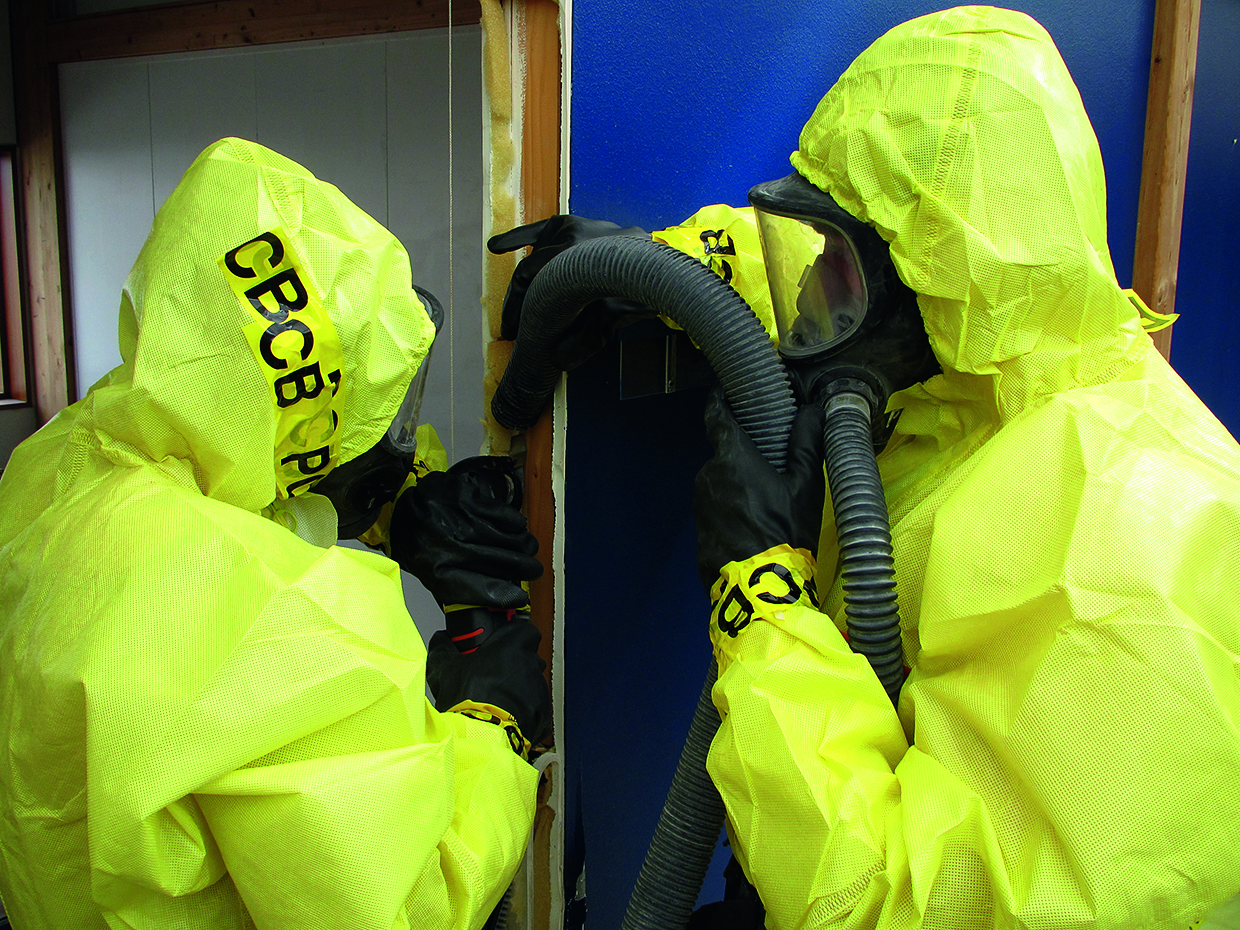
Figure 28. Removing caulk containing PCBs. Workers are dressed in protective suits and gloves. Photo: Tscherning A/S.
6.2 Protecting Occupants
When a building containing PCBs is renovated, occupants must be kept safe from PCB-exposure. This section describes the rules for safeguarding occupants before, during, and after renovating a building containing PCBs.
6.2.1 Responsibility
The electronic PCB guide describes who is responsible for the safety of occupants (www.pcb-guiden.dk, 2016).
6.2.2 The Danish Health Authority’s Recommended Action Values
The Danish Health Authority has revised its recommended action values from 2011 (Danish Health Authority, 2013). The recommended action values for PCB concentrations in indoor air are listed in Table 14 (see SBi Guidelines 241, Survey and Assessment of Building-Related PCBs, 1.3.5 Recommended action values (Andersen, 2015)).
Table 14. The Danish Heath Authority's recommended action values for PCB concentrations in indoor air (Danish Heath Authority, 2013).
PCB concentrations in indoor air | Action |
|---|---|
> 3,000 ng/m3 | The Danish Heath Authority estimates that occupancy for longer periods may be associated with significant health risk and should, in most contexts, be considered an immediate health risk. Source removal and/or encapsulation without undue delay is recommended, also in buildings used only periodically over a 24-hour period. Temporary abatement should be implemented immediately. These will normally comprise optimised ventilation, temperature regulation, and intensified cleaning adjusted to current cleaning levels and building use. |
300–3,000 ng/m3 | The Danish Health Authority estimates that occupancy for longer periods may have adverse health effects. The implementation of immediate temporary abatement is recommended. Temporary abatement is only expected to effectively reduce PCB concentrations to below 300 ng/m3 in cases of light contamination and source removal and/or encapsulation will often be necessary. The following factors should be considered when prioritising interventions: – Buildings occupied by children and young people are given priority – The building’s usage rate and level of PCB contamination may be included. Buildings occupied partially over a 24-hour period only contribute to individual PCB loads corresponding to the time of occupancy. – Buildings occupied by many different persons, mostly for short periods by each individual (e.g., corridors and specialist teaching rooms in a school), result in a lower load for each individual. |
< 300 ng/m3 | The building contains PCBs, but the Danish Health Authority estimates that exposure will not result in increased health risks. |
There are two recommended action values for PCB in indoor air of 300 and 3,000 ng/m3, respectively. If levels exceed 300 ng/m3, the Danish Health Authority recommends that remediation be implemented in due course, but if levels of 3,000 ng/m3 are exceeded, the Authority recommends implementing abatement without undue delay. Excessive levels should result in temporary abatement being implemented immediately. Airborne PCB concentrations are calculated as 5 times the sum of the 7 indicator PCBs (www.pcb-guiden.dk).
To reduce PCB exposure indoors, the Danish Health Authority directs special focus on buildings with high contamination levels and high occupancy numbers, including children, young people, and women of child-bearing age. If contamination in the interval 300–3,000 ng/m3 is confirmed, the Danish Health Authority recommends that buildings occupied by children and young people be given high priority. Moreover, the levels of occupancy, contamination, and length of occupancy should also feature in the priority considerations.
6.2.3 Duties of the Local Authority
The local authority has a duty to inspect residential homes and buildings used for human occupancy when the local authority estimates that such properties, on account of their location, interior design, or other issues, are deemed detrimental to health or constitute a fire risk (see § 75 in Bekendtgørelse af lov om byfornyelse og udvikling af byer (Executive Order on Urban Planning and Urban Development) (Ministry of Transport and Housing, 2010)).
If tenants have reason to suspect PCBs in their homes, they can approach their landlord or administrator. If the building owner does not investigate to see whether the building contains PCBs after having been requested to do so by tenants, the local authority has a duty to react if it is brought to their attention that a residential building may constitute a hazard to health (www.pcb-guiden, 2016).
6.2.4 Workplaces in Buildings with PCBs
According to the Danish WEA, the indoor climate must be healthy and safe. In the case of workplaces, the Danish WEA estimates that people only occupy the building for one fourth of the time. For this reason, PCB concentrations in the indoor air can be higher than the lower recommended action value (see Section 6.2.2, The Danish Health Authority’s recommended action values and SBi Guidelines 241, Survey and Assessment of Building-Related PCBs, 1.3.5 Recommended action values (Andersen, 2015)). Normally, the recommended action values are therefore multiplied by four (i.e., the lowest action value for a workplace is 1200 ng/m3). However, the Danish WEA does not accept PCB concentrations above 0.01 mg/m3 (10,000 ng/m3) (Danish WEA, 2014) (see Table 15).
Table 15. The Danish WEA recommendations to inspectors (Danish Working Environment Authority, 2014).
PCB concentrations in indoor air | Typical action |
|---|---|
> 10,000 ng/m3 | As a rule, an immediate enforcement notice is issued for measures to reduce concentrations immediately. |
3,000–10,000 ng/m3 | As a rule, an enforcement notice is issued with a deadline for implementing interventions to reduce concentrations. This is graduated according to working hours. The Danish WEA only accepts brief and occasional work being carried out when values approach the limit value. The deadline can be 3–12 months for full-time work. |
1,200–3,000 ng/m3 | Enforcement notice with deadline for intervention to reduce concentrations. Graduations are made according to working hours. The deadline can be 1–2 years for full-time work. |
Below 1,200 ng/m3 | No reaction. |
For PCB concentrations exceeding 1,200 ng/m3, the Danish WEA recommends that temporary or permanent abatement measures be implemented to help reduce concentrations. Such measures could be cleaning, ventilation, lowering the temperature, replacement, or similar measures (Danish Working Environment Authority, 2014).
For PCB concentrations of 1,200–10,000 ng/m3, the inspector will initially issue an enforcement order with a deadline for implementing measures to reduce concentrations. The deadline is relative to the working hours for each individual person, the number of employees, and the character of the source (i.e., whether it is easy or difficult to remove or encapsulate). In the concentration range 3,000–10,000 ng/m3, the deadline can be between 3 months and 1 year for full-time work while the deadline in the range 1,200–3,000 ng/m3 can be 1–2 years.
The Danish WEA must issue a consultancy notice when there is a documented risk of health implications from PCB in the indoor climate (Danish Working Environment Authority, 2014). This is described in the At-vejledning 1.10.1 (WEA brief 1.10.1), July 2013, (Danish Working Environment Authority, 2013c). A consultancy notice implies that the enterprise has a duty to use an authorised health and safety consultancy firm to reduce PCB concentrations.
If there is reason to suspect PCBs in the workplace, employees must contact their employer and inform about this. The employer has a duty to investigate whether PCBs are present in the indoor air on the premises where the work is carried out. If the employer does not react or if there is disagreement about the extent of the problem, employees can contact the Danish WEA (www.pcb-guiden, 2016).
6.2.5 Occupancy During Renovation
It is important that PCBs are not dispersed to employees in the building, other workers on the site, or to the environment. The workplace must be sealed off and signage must be put up informing people in the vicinity of ongoing PCB work, so that unauthorised persons will not be exposed
to PCB contamination. Prior to the removal of contaminated materials, the work area must be sealed off by erecting temporary dust-screening walls and establishing negative pressure in the work area (BrancheArbejdsmiljøRådet for Bygge og Anlæg, 2010).
6.2.6 Occupancy After Renovation
Occupant safety measures depend on the abatement interventions selected. If a controlling remediation method has been implemented, it will be necessary to control the efficacy of method in perpetuity (see Section 2.8.1, After Remediation).
Renovation will often cause a temporary rise in PCB concentrations due to interventions within the building and due to exposed sources. For this reason, it will be necessary to measure PCB concentrations in the indoor air to check that concentrations will drop to a stable low level. Furthermore, the situation will often require the control of abatement interventions over an extended period while concentrations drop. This will, for example, mean increased ventilation, which could partly result in increased operational costs and could inconvenience occupants. Information and communication with the occupants are essential for the maintenance of goodwill among occupants (see Section 2.9, Communicating with Occupants and Other Involved Parties).
6.3 Spreading of PCBs to the Surrounding Environment
The handling PCBs carries the significant risk of spreading them to surrounding environments. This includes both waste residues and the spreading of dust and gasses.
BrancheArbejdsmiljøRådet for Bygge og Anlæg has published guidelines outlining precautionary measures and methods for limiting the spread of PCBs to the environment (BrancheArbejdsmiljøRådet for Bygge og Anlæg, 2010). These methods include enclosure, shielding, adding dust extraction devices to individual tools, and establishing negative pressure ventilation with filtrated exhaust into the open. Detailed descriptions are also available in the guidelines published by Dansk Asbestforening (Dansk Asbestforening, 2010). Some local authorities demand carbon filtration of exhaust air (BrancheArbejdsmiljøRådet for Bygge og Anlæg, 2010).
6.3.1 Exterior and Interior Work
All PCB-contaminated building materials must be collected and, for exterior renovation work, spillage on the soil or loss to the sewer system must be avoided. This can be done by covering soil and rainwater gullies. All waste must be collected and treated correctly (see Section 7, Waste Management).
Interior renovation will often cause PCB-contaminated dust and elevated PCB concentrations in indoor air. The spreading of dust and gasses must therefore be limited, so that fellow workers on the site, neighbours, and passers-by are shielded from exposure. Dust and high PCB concentrations in the building’s indoor air must be avoided, as this can further contaminate interior surface areas.
Figure 29 shows an example of exterior renovation with screened-off scaffolding and weatherproof enclosure of the work area.
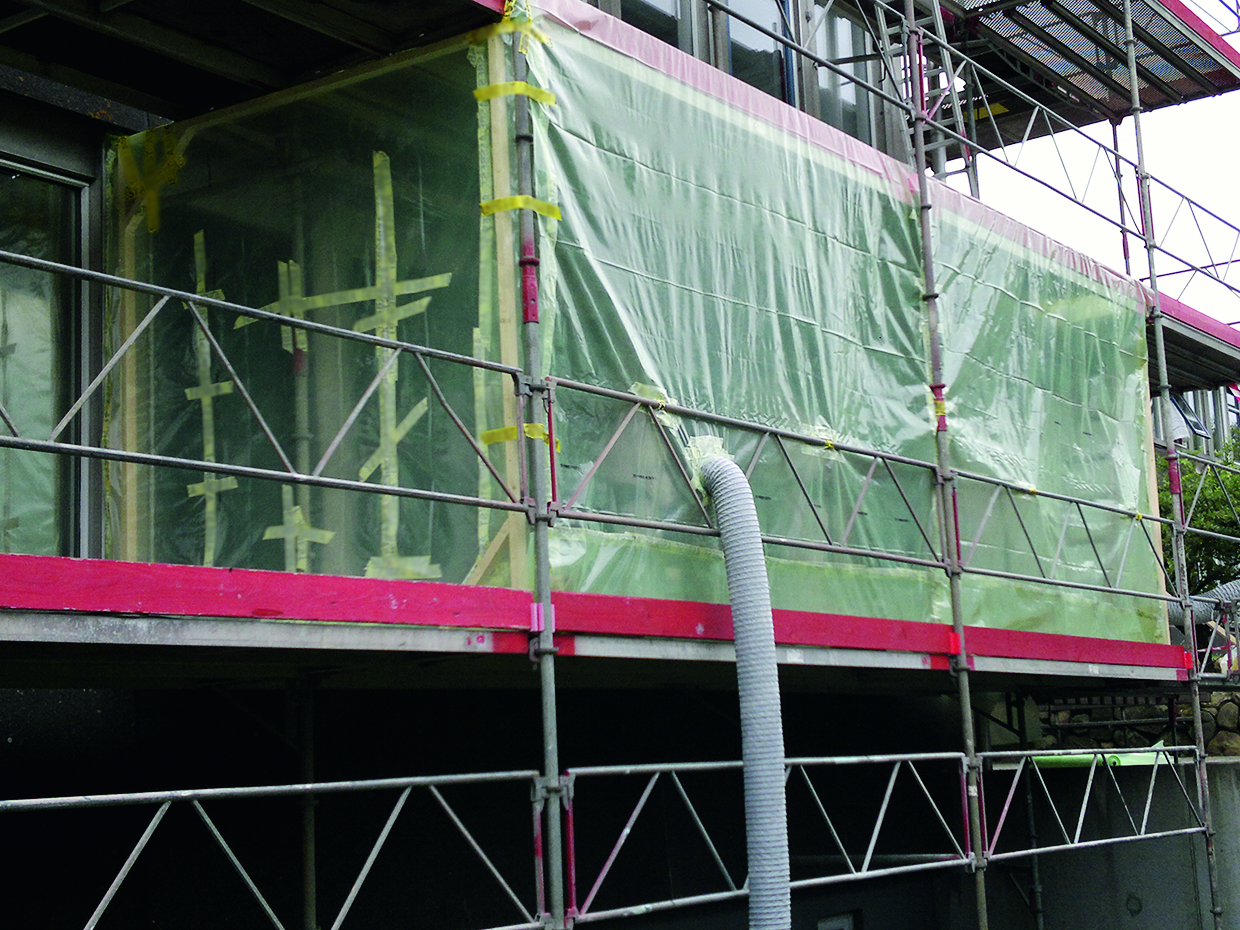
Figure 29. Example of shielding to prevent the spread of PCBs to the exterior environment.
6.3.2 Cleaning
Any abatement intervention or renovation should be introduced by thorough cleaning of the whole building, including ventilation ducts, fresh-air vents, and cavities. When cleaning ventilation ducts, focus should be placed on avoiding the spreading of PCBs. Avoid contaminating the indoor air further by opening between indoor air and cavity spaces with high levels of PCB concentrations. Ventilation with negative pressure or into the open is recommended before opening a cavity with potentially high levels of airborne PCB concentrations (Haven & Langeland, 2011).
Cleaning should be done on an ongoing basis during renovation work and residual waste (such as discarded caulk) containing PCBs should be collected in suitable containers. Removing the caulk leaves exposed surface areas which might off-gas PCBs into the air. Waste should therefore be collected on an ongoing basis and deposited in suitable closed containers. Steps must also be taken to avoid treading on residual caulk and dispersing it.
When the work has been completed, the site is cleaned using a vacuum cleaner (e.g., fitted with a HEPA filter and possibly a filter that removes volatilised PCBs from the exhaust). The vacuum cleaner is placed as closely as possible to an air purifier with a vacuum effect (BrancheArbejdsmiljøRådet Bygge og Anlæg, 2010). For interior renovation, surface areas on the site are vacuumed. Moreover, Dansk Asbestforening recommends that surface areas be wiped with a damp cloth after vacuuming (Dansk Asbestforening, 2010). For exterior renovation, material used to screen off soil and surface areas are disposed of, and the area is carefully checked for any residual waste (Dansk Asbestforening, 2010).
When the work has been completed, tools and equipment must be cleaned thoroughly on site or disposed of as PCB-contaminated waste. PCB-contaminated dust on tools is removed using on-site vacuum cleaning. Vacuum cleaner bags, filters, and plastic for shielding are disposed of as PCB-contaminated waste. Tools such as knife blades, cutters, lock saws, and bayonet saws contaminated by caulk are also disposed of as PCB-contaminated waste. BrancheArbejdsMiljøRådet for Bygge og Anlæg, 2010).
6.3.3 Signage
The construction site is closed to the public and must be inaccessible to unauthorised persons. The area must be fenced-off and signage should be used to inform people about the danger associated with entering the site (see Figure 30). This will not only protect unauthorised persons against exposure but will also ensure that no PCB-contaminated material or soiled equipment is removed from the site.
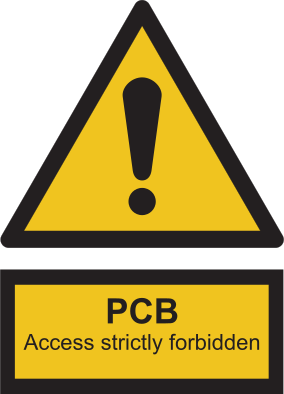
Figure 30. Signage for a construction site containing PCBs.